


Fire & Smoke Damage Restoration

Quick answer:

Don’t re-enter until the fire department says it’s safe, and don’t wipe soot, it’s acidic and smears into surfaces, causing permanent staining. Ventilate, protect yourself with an N95 and gloves, and have the structure inspected. Light surface soot may be DIY, but heavy soot, structural fire damage, and smoke odor trapped in walls need professional restoration.

Safety before cleanup

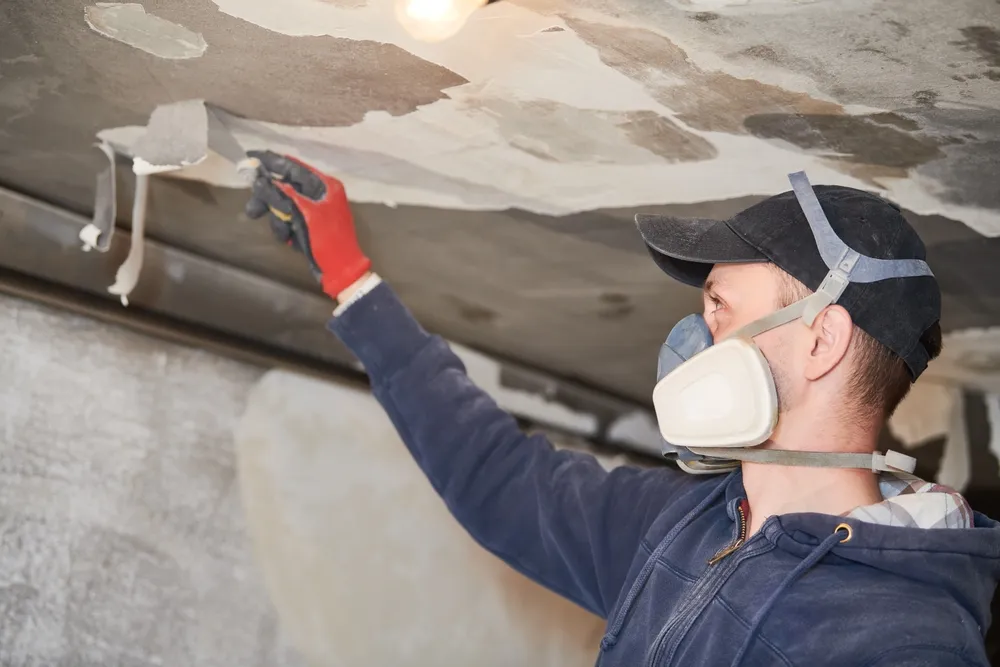
A fire scene can hide structural weakness, electrical damage, and toxic residue. Wait for clearance from the fire department, wear an N95 respirator and gloves, and ventilate before doing anything.

If the fire was large, get a structural and electrical inspection first.

Why you shouldn't wipe soot

Soot is oily and acidic. Wiping it dry grinds it into paint, drywall, and fabric and makes staining permanent.

Restoration pros use dry-cleaning “chemical sponges,” HEPA vacuums, and specific solvents matched to the residue type (dry smoke, wet smoke, protein, or fuel/oil), because the wrong method sets the stain.

Tackling smoke odor

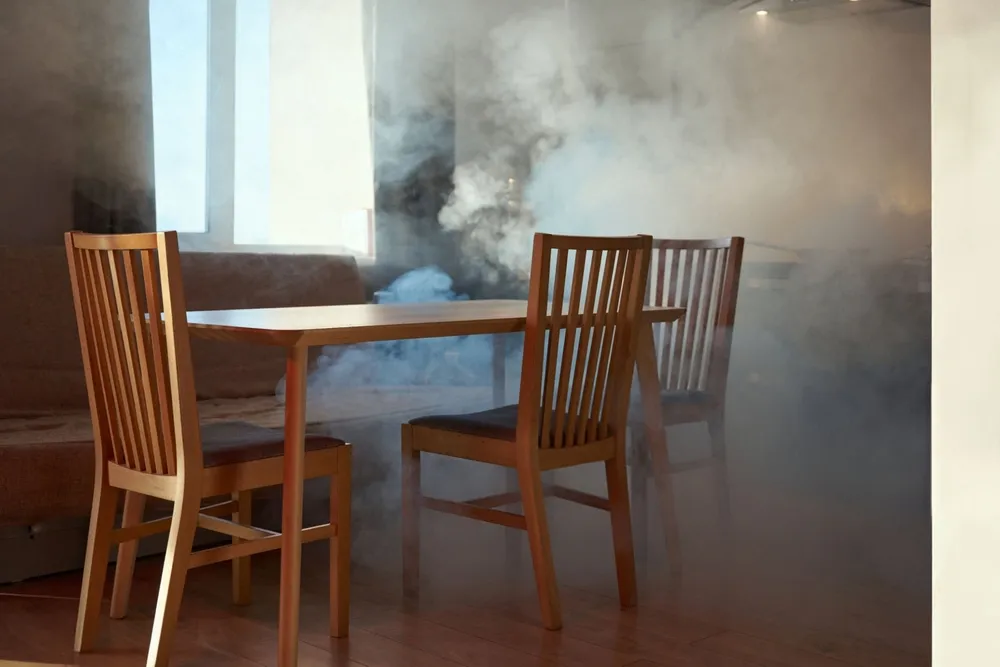
Smoke smell hides in porous materials, drywall, insulation, upholstery, HVAC ducts. Surface cleaning alone won’t remove it.

Professionals use thermal fogging, ozone or hydroxyl treatment, and sometimes sealing or replacing affected materials. Air out, clean washable items, and change HVAC filters as a first pass.

The restoration process, every time

Good restoration follows the same logic, whether it’s a flooded basement or a century-old farmhouse:

Make it safe

Handle immediate hazards first (electrical, structural, contamination).

Find the cause

Fix the source, not just the symptom, so the damage doesn't return.

Repair from the inside out

Structure and systems before surfaces.

Maintain

Protect the work you paid for.
What you can DIY vs call a pro

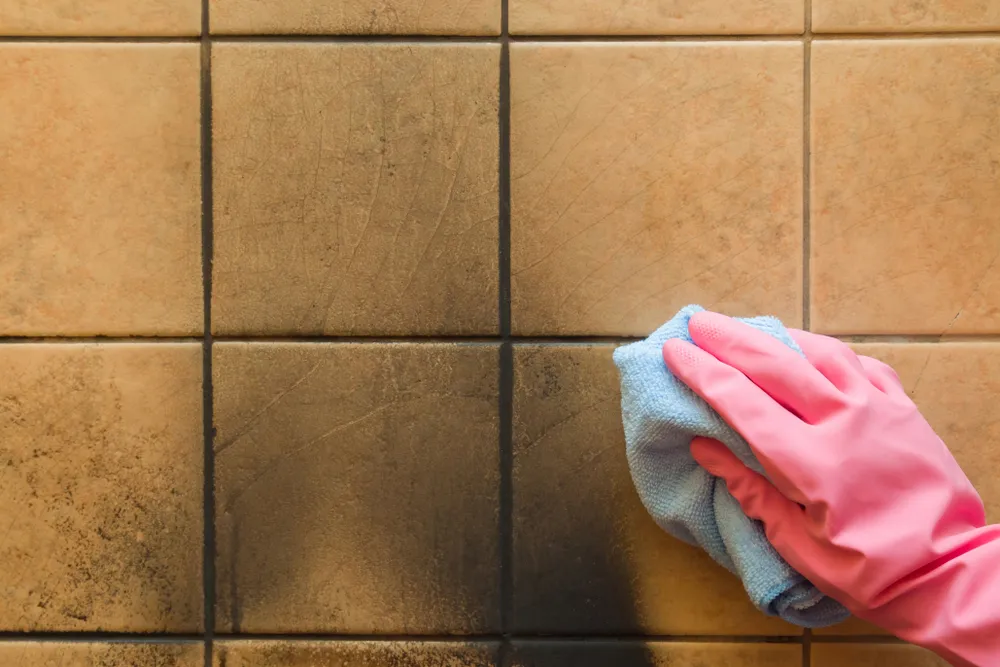
Light soot on a small, non-porous area — sealed tile, glass, metal, can sometimes be cleaned by a careful homeowner.

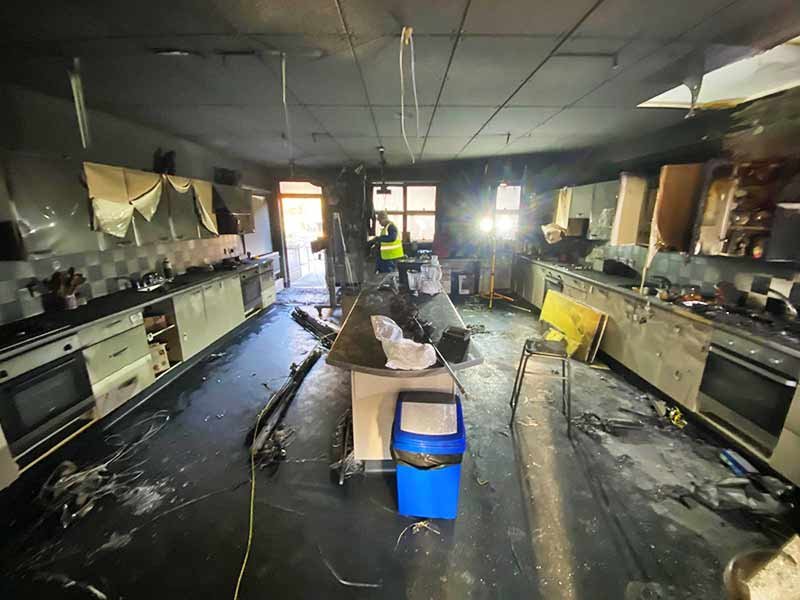
Everything else (heavy soot, charred structure, odor in walls/ducts, water damage from firefighting) belongs to a fire-restoration professional. Firefighting also leaves water behind, so start drying alongside soot cleanup.

Frequently Asked Questions

Can I clean soot myself?

Only light soot on small, non-porous surfaces, and never by wiping it dry. Heavy soot needs a pro.
Thermal fogging, ozone/hydroxyl treatment, HEPA filtration, and sealing or replacing porous materials that hold odor.
Not until it’s been cleared. Soot, poor air quality, and structural damage make it unsafe to occupy right away.
Most homeowner policies do. Document everything and file promptly.